Writing & SEO
ZeroGPT
We tested ZeroGPT on an original AI passage and a public-domain human control, then compared Sapling. Read the scores, screenshots and what they cannot prove.
Research summary
We tested ZeroGPT on an original AI passage and a public-domain human control, then compared Sapling. Read the scores, screenshots and what they cannot prove.
ZeroGPT gave our original AI-authored passage a 100% AI score and our human-authored control a 0% score. Both examples matched their known origins. Two selected passages cannot establish a detector’s general accuracy, false-positive rate or reliability for judging another person’s work.
What we tested
Tested on 16 November 2026 by AI Product Reviews automated browser test. This is a limited hands-on automated check of the public, free browser interface without signing in. The interface did not expose an exact software or model version. It is not a long-term human review or an independent accuracy benchmark.
We pasted two complete English texts into the ZeroGPT public checker and ran its text check. The interface displayed a 15,000-character input allowance in this session. We did not test paid plans, file uploads or other utilities.
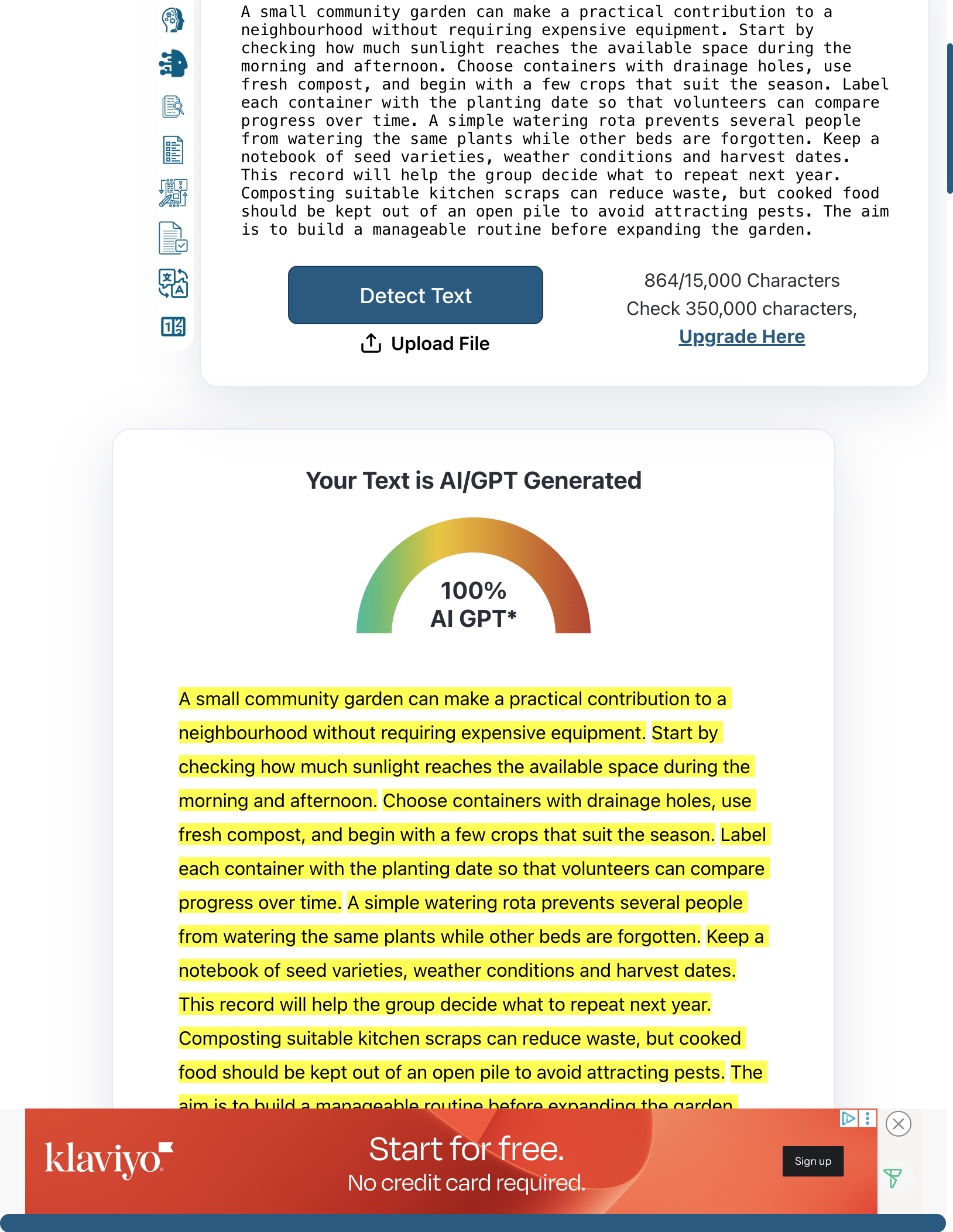
The AI sample was an original paragraph written by the reviewing agent about setting up a community garden. It began “A small community garden can make a practical contribution to a neighbourhood without requiring expensive equipment.” It contained 138 words according to ZeroGPT’s displayed count. We preserved the complete exact text in the downloadable record rather than using a vendor-provided demonstration.
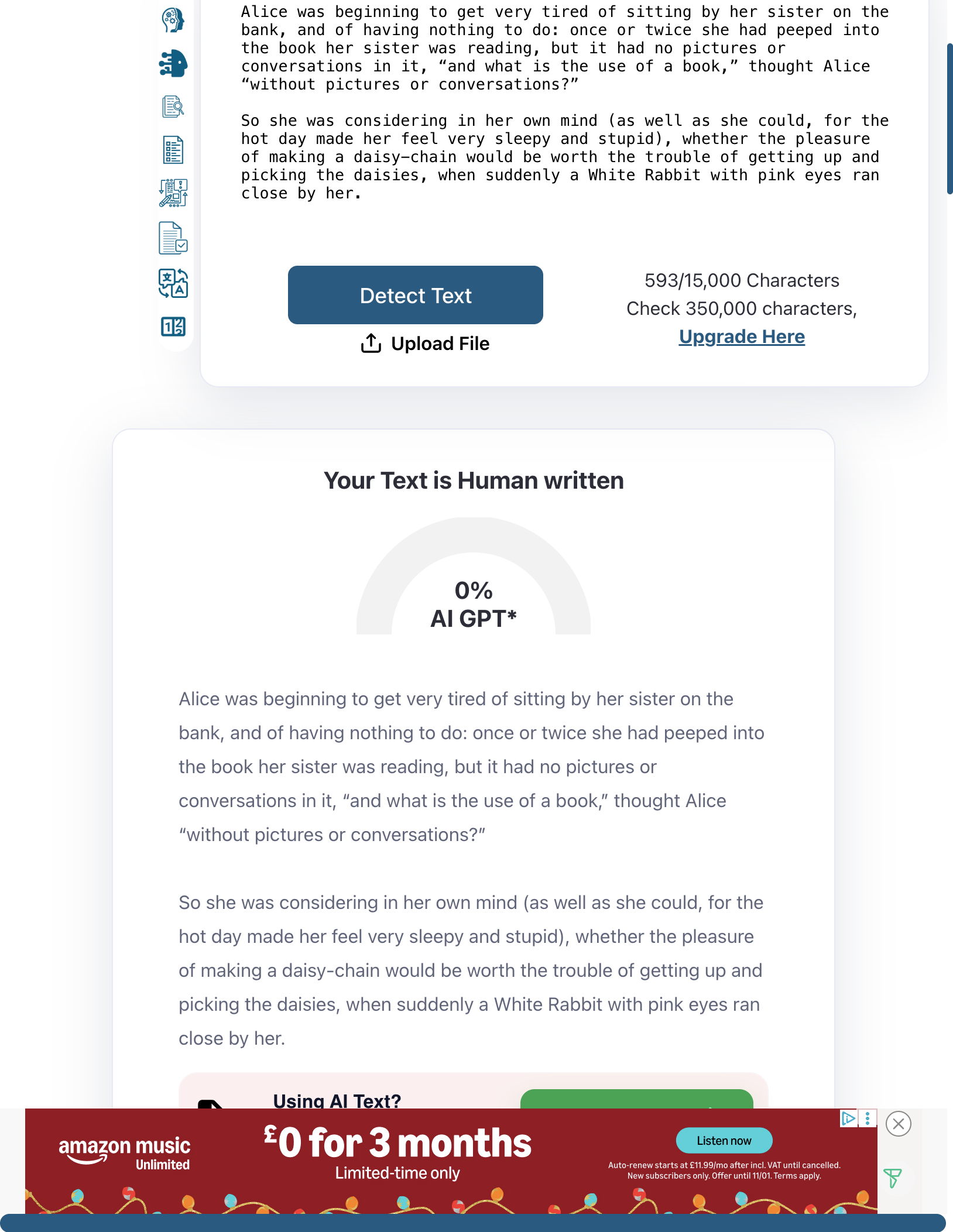
The human control was the first two paragraphs of Lewis Carroll’s *Alice’s Adventures in Wonderland*, read from Project Gutenberg. It began “Alice was beginning to get very tired of sitting by her sister on the bank”. ZeroGPT counted 112 words. This is independently identifiable historical human writing; it is also famous material which could be known to a detector’s training data.
Actual outputs
The AI sample returned 100%. ZeroGPT labelled it “Your Text is AI/GPT Generated” and highlighted the text.
The Lewis Carroll control returned 0%. The result label was “Your Text is Human written”.
Comparison with Sapling AI Detector
We submitted these same two texts to Sapling AI Detector. Its AI score was 99.8%, and its human control score was zero. That is agreement on these examples. The different percentages do not establish that one detector is more accurate: we have no evidence that the score scales are calibrated alike.
How much confidence should you place in this?
This was a tiny, nonrepresentative English test. It did not include modern student essays, mixed human and AI editing, translated prose, non-native English writing, paraphrased passages or short social posts. The human control’s age and familiarity make it a particularly limited substitute for contemporary writing. No measured error rate can be derived from this exercise.
We did not independently validate the accuracy claims on the vendor’s site. An AI-detection result also does not identify a copied source, so it should not be described as proof of plagiarism. For a consequential authorship decision, preserve drafts and provenance and investigate the work itself. A detector percentage supplies an output to examine, not proof that someone used AI.
The public tool was accessible and produced inspectable results without an account in our session. That is the useful conclusion supported here. Current prices, private-document handling and broad language coverage were not verified.
Download both exact inputs and outputs.